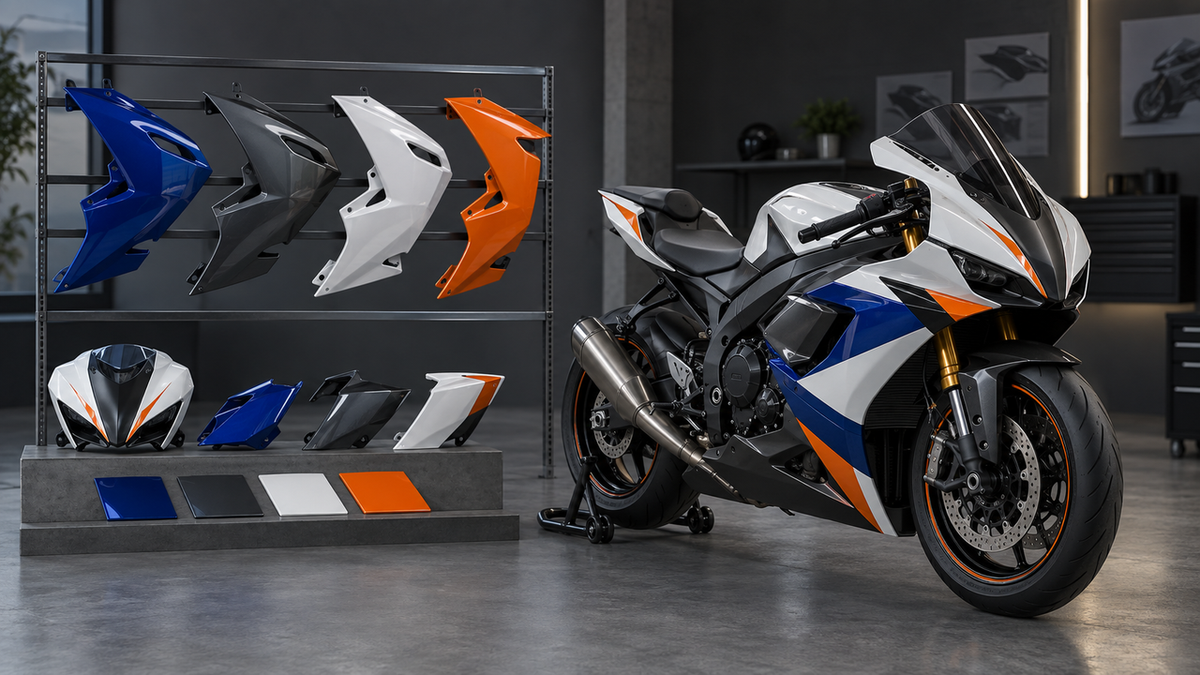

Direct answer: The best affordable sport bike fairings are not automatically the kits with the lowest checkout price. For a clean restoration, choose model-specific bodywork that matches the motorcycle’s exact year and condition, covers the panels you actually need, and keeps paint, hardware, fitment, shipping, and rework costs predictable. A painted full kit usually makes the most sense when several visible panels are faded or damaged; selected painted panels can be better for isolated damage; and unpainted fairings are the stronger choice when a local painter will control the final color. If the motorcycle has crash damage, inspect the supports behind the bodywork before choosing any kit.
This 2026 buying guide is organized around the real restoration decision: how much work the motorcycle needs and what it will cost to reach a clean, usable result. It complements Amotopart’s existing guide to budget fairing quality and red flags by focusing on restoration budget, painted versus unpainted bodywork, bike condition, and the costs that are easy to overlook.
What are the best affordable motorcycle fairings for a clean sport bike restoration?
The best affordable choice is the smallest model-specific fairing solution that produces a coordinated result without leaving important damage unresolved. For an otherwise straight motorcycle with widespread cosmetic wear, that may be a complete painted ABS kit. For one cracked side panel, it may be a verified replacement panel rather than an entire set. For a custom color match, an unpainted kit plus a qualified local painter may give better control than trying to blend a pre-painted panel into aged bodywork.
Start with the motorcycle, not the catalog photo. Record the make, model, production year, generation, market version, existing modifications, and condition of the mounting points. Then define the finish goal: a coordinated full-bike refresh, a localized repair, or a custom repaint. Amotopart’s current fitment FAQ says product pages identify compatible models and years and invites buyers to provide a VIN or a clear photo of the original part when compatibility is uncertain. That verification step is more useful than assuming that a similar-looking panel will fit.
Which fairing route gives the best value for each restoration condition?
|
Motorcycle condition
|
Best-value route
|
Why it can make sense
|
Verify before ordering
|
|---|---|---|---|
|
Straight motorcycle with faded, mismatched, or heavily worn visible bodywork
|
Model-specific painted full kit
|
A coordinated finish can avoid trying to match several aged panels one at a time.
|
Exact year and generation, panel inventory, selected finish, transferred parts, and current production status.
|
|
One or two damaged panels with sound surrounding mounts and matching bodywork
|
Verified replacement panel or small panel group
|
It avoids buying and installing bodywork that the project does not need.
|
Panel boundaries, tabs, neighboring overlaps, color expectations, and whether the exact panel is offered separately.
|
|
Complete custom color change or professional paint plan
|
Unpainted kit plus a qualified local painter
|
The painter can control preparation, color matching, graphics, and clear coat as one system.
|
Surface condition, preparation requirements, painter quote, test-fit sequence, and responsibility for corrections.
|
|
Motorcycle with crash history or several panels that no longer align
|
Inspection first, then the smallest suitable panel set
|
New bodywork cannot correct a bent stay, bracket, subframe, or mounting boss.
|
Structural supports, lights, wiring, steering, cooling, exhaust, heat protection, and all attachment points.
|
The condition-first approach keeps this guide separate from a simple single-panel-versus-full-kit comparison. Damage scope still matters, but the better buying decision comes from combining scope with finish, mounting condition, labor, timing, and the total restoration objective.
Should you buy painted or unpainted fairings?
Painted fairings are usually the more predictable route when the rider wants a coordinated appearance and does not want to manage a separate paint project. They remove most of the sanding, priming, color application, graphics, clear-coat, and curing workflow from the buyer’s plan. They do not remove the need to verify fitment, inspect the finish on arrival, and loosely test-fit every major panel before final tightening.
Unpainted fairings make more sense when the restoration depends on a specific paint system, exact coordination with repaired original panels, artist-led graphics, or a local body shop’s process. The lower bodywork price can be misleading if it is compared without the cost of preparation, materials, paint labor, correction work, and transport to and from the painter.
|
Decision factor
|
Painted fairings
|
Unpainted fairings
|
|---|---|---|
|
Best for
|
A coordinated restoration with a selected ready-painted or made-to-order finish.
|
A custom paint plan, local color matching, or professional refinishing workflow.
|
|
Separate work
|
Inspection, test fit, installation preparation, and transfer of required original parts.
|
Test fit plus preparation, primer, color, graphics if used, clear coat, curing, and correction.
|
|
Main budget risk
|
Finish damage, color differences against retained aged panels, or ordering the wrong configuration.
|
An incomplete paint quote or underestimated surface preparation and rework.
|
|
Key verification
|
Exact SKU, delivered scheme, panel contents, current production timing, and return conditions.
|
Panel surface, painter requirements, paint-system compatibility, approval process, and total labor.
|
For a deeper workflow comparison, see Painted vs. Unpainted Motorcycle Fairings: The Easiest Path to a Sport Bike Restoration in 2026.
How should you calculate the total restoration budget?
Build the budget around the cost of reaching an inspected, usable installation—not only the price of the fairings. Use the selected listing and your motorcycle’s condition to estimate each category below. A universal dollar figure would be unreliable because panel count, paint route, model, damage, labor, delivery destination, and retained original parts differ from one restoration to another.
|
Budget category
|
What belongs in it
|
Question to answer before payment
|
|---|---|---|
|
Bodywork
|
The selected panel, small panel group, or full kit.
|
Which exact panels are included, and which visible or inner pieces remain original?
|
|
Finish
|
Painted configuration, custom design work, or local preparation and paint.
|
Is the delivered finish confirmed, and what work remains after delivery?
|
|
Hardware and transfers
|
Clips, bolts, grommets, brackets, ducts, windscreen, trim, and heat protection.
|
What is included, what must be reused, and what is damaged or missing?
|
|
Fitment and installation
|
Inspection, test fitting, removal and reassembly, and professional help where needed.
|
Are the mounts straight, and who will diagnose any mismatch before irreversible work?
|
|
Logistics and downtime
|
Processing, shipping, receiving inspection, possible correction, and workshop scheduling.
|
Does the live estimate apply to the exact SKU and U.S. destination?
|
|
Problem resolution
|
Return eligibility, possible restocking or freight exposure, and documentation requirements.
|
What do the current policies say for this configuration, especially if it is customized?
|
Do not convert Amotopart’s general policy windows into a promise for a specific order. The current shipping policy separates processing from carrier time and notes that special circumstances and remote U.S. destinations can change delivery. Confirm timing for the selected SKU and ZIP code before scheduling disassembly or workshop labor.
What hidden costs can make cheap fairings expensive?
Missing or damaged supporting parts. A low-priced panel set does not help if the motorcycle also needs clips, grommets, stays, brackets, ducts, or heat protection that were not included or cannot be reused. Confirm the exact kit contents rather than treating “full kit” as a standardized panel count.
Paint rework or finish mismatch. A new painted panel may look different beside sun-faded original paint. A raw kit may require more surface preparation than the first paint estimate assumed. Decide whether the restoration needs one replacement panel, a coordinated visible set, or a complete custom finish before comparing prices.
Fitment diagnosis and repeated labor. A panel that appears misaligned may expose a bent support, the wrong generation, an omitted transfer part, or an incorrect assembly sequence. Forcing, cutting, or enlarging holes before diagnosing the cause can turn a reversible issue into a damaged part.
Custom-order and return limits. Amotopart’s current Return & Refund Policy asks buyers to inspect orders on receipt and contact the company immediately about defects, damage, or wrong items. It also identifies custom or special-order products as potentially non-returnable. Read the live terms for the selected configuration before approving custom work.
Downtime. Production, transit, receiving inspection, dry fitting, paint work, corrections, and workshop availability all affect how long the motorcycle remains apart. A route that costs slightly more at checkout may still be the better value if it removes a separate paint process or prevents an avoidable reorder.
How does motorcycle condition change the best choice?
Light cosmetic wear. If the tabs, brackets, and major panels are intact, the restoration may only need a coordinated visual refresh. Compare the condition of retained panels against the planned finish and keep the original bodywork until the replacement set has been inspected and test-fitted.
Localized panel damage. Inspect the cracked panel’s neighboring overlaps and mounting points. A verified individual replacement can be the best-value route when surrounding bodywork and supports remain sound. It becomes less attractive when a new painted panel would visibly conflict with the rest of the motorcycle or when adjacent tabs are also damaged.
Mixed repair history. Previous modifications, repaired tabs, aftermarket lights, altered undertails, or nonstandard brackets can change how model-specific bodywork installs. Disclose those changes when asking for fitment support and compare the mounting side—not only the exterior design.
Crash history. Remove damaged bodywork and inspect the structure behind it before blaming or ordering panels. If the fairing stay, subframe, steering, brakes, suspension, wheel, cooling system, wiring, lights, exhaust clearance, or mounting bosses are uncertain, stop and use a qualified technician. The detailed decision path is covered in Best Replacement Fairings for a Crashed Sport Bike: A Rebuild Guide in 2026.
What should U.S. buyers verify before ordering?
-
Match the exact make, model, year, generation, market version, and existing bodywork configuration.
-
Confirm the selected SKU, paint status, panel-by-panel contents, and every original part that must be transferred.
-
If compatibility is unclear, provide the VIN or original-part photos through Amotopart’s current support process and keep the written confirmation.
-
Check the live production, stock, and destination estimate for the exact configuration; a collection page is not a permanent inventory promise.
-
Read the current shipping, cancellation, return, damage, and custom-order conditions before payment.
-
Plan to photograph the package, inventory every piece, inspect the finish and mounting areas, and loosely dry-fit the major panels before irreversible modification or final tightening.
For deadline-sensitive restorations, Amotopart’s U.S. Sport Bike Restoration guide explains how ready-to-ship, made-to-order painted, and custom routes differ. Treat those routes as planning options, then verify the live details for the actual order.
How do you compare affordable fairing kits without relying on price alone?
Use the same scorecard for every candidate. First, rate the fitment evidence: exact year range, generation, variant, mounting-side detail, and support process. Second, rate scope: named panels, transferred parts, and whether the set solves the actual damage. Third, rate the finish path: what arrives complete, what remains to be painted, and how retained bodywork will look beside it. Fourth, rate total project effort: inspection, installation, logistics, downtime, and the policy path if something is wrong.
A kit deserves “best affordable” status only when those four areas are understandable before purchase. If the low price depends on assuming that missing information will work out later, the kit belongs in a verify category, not at the top of a buying guide.
Best affordable fairing choice by rider scenario
Best for a coordinated cosmetic restoration: a model-specific painted full kit when the motorcycle is structurally sound and several visible panels need a consistent finish.
Best for isolated damage: a confirmed individual panel or small panel group when neighboring tabs, supports, paint, and overlaps remain usable.
Best for a custom color or professional repaint: an unpainted model-specific kit when the painter will control preparation and the entire finish system.
Best for a crash rebuild: inspection first, followed by the smallest panel set that solves the verified damage. Fairings are bodywork; they are not a repair for structural, steering, braking, suspension, cooling, electrical, or mounting problems.
Final buyer checklist
-
The motorcycle identity and modification history are documented.
-
The supports behind the bodywork have been inspected.
-
The restoration goal and acceptable finish are defined.
-
Painted versus unpainted has been compared as a complete workflow.
-
The exact panel inventory and transfer-parts list are confirmed.
-
The budget includes finish, hardware, labor, logistics, downtime, and possible correction.
-
The live shipping and return conditions have been read for the selected configuration.
-
A receiving inspection and full loose test fit are planned.
Frequently asked questions
Are full fairing kits always the best value?
No. A full kit can be good value when several visible panels need replacement or a coordinated finish matters. It can be unnecessary when damage is truly isolated. Let the inspected motorcycle and finish goal determine the scope.
Are painted fairings cheaper than buying unpainted panels and painting them locally?
There is no universal answer. Compare the delivered painted configuration against the complete local paint quote, including preparation, materials, graphics, clear coat, correction, transport, and downtime. The better value is the route with the more predictable total project cost.
Can pre-drilled fairings be installed without checking fitment?
No. Pre-drilled means the holes were made before delivery; it does not prove that the exact kit, motorcycle generation, transferred parts, supports, and assembly sequence will align without preparation. Inspect and test-fit before final tightening.
Where should a U.S. buyer start?
Start by browsing Amotopart fairings by brand, model, and year. Then compare the exact listing against the motorcycle’s condition, the desired finish, the total budget, and the current policies. Do not rely on a collection label or search snippet as proof of stock, timing, or fitment.
Final recommendation
For most clean sport bike restorations, the best affordable route is the one that removes the largest verified cost risk. Choose a painted full kit for widespread cosmetic wear when a coordinated finish matters; choose verified replacement panels for genuinely isolated damage; choose unpainted bodywork when professional local paint control is part of the plan; and inspect crash-damaged motorcycles before buying any panel set. Once those decisions are made, compare exact fitment, contents, finish, support, and live order terms—not the headline price alone.