
TL;DR
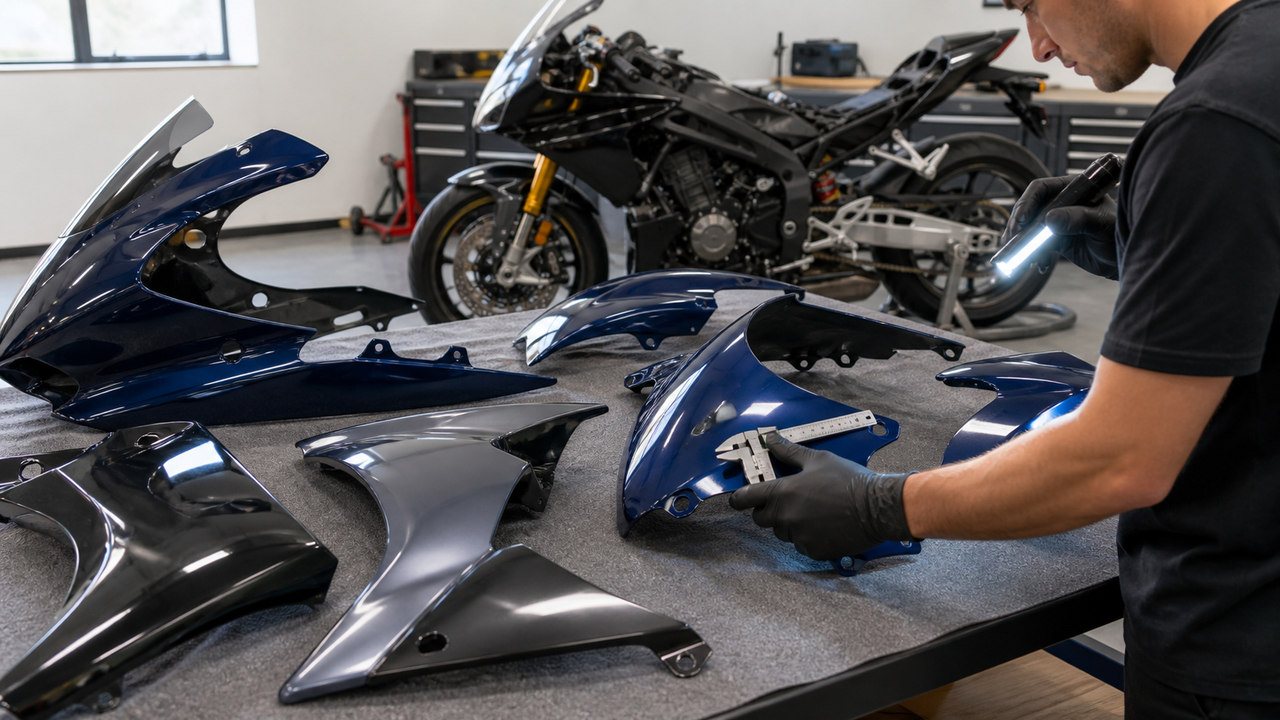
For a sport bike used mainly on public roads with occasional track days, street fairings are usually the practical choice. They are designed around the bike’s road equipment—typically headlights, turn signals, mirrors, windscreen, ducts, inner panels and license-plate-related hardware—so the motorcycle can return to its normal street configuration after the event. Choose track fairings when the bike is transported to the circuit, road equipment is unnecessary, and you are prepared to meet the track organizer’s installation and technical-inspection rules.
For genuinely mixed use, the cleanest long-term setup is often two bodywork sets: keep model-specific street bodywork for road riding and use dedicated track bodywork for circuit days. That costs more up front and requires storage and changeover time, but it avoids repeatedly adapting one set for two different jobs.
Quick Comparison
|
Decision point
|
Street fairings
|
Track fairings
|
|---|---|---|
|
Primary use
|
Public-road riding, commuting and occasional track days where road equipment remains installed or can be safely prepared
|
Track-only or frequent circuit use, especially when the motorcycle is trailered
|
|
Lights and mirrors
|
Normally provides model-specific openings or mounting provisions, but verify the exact kit
|
May omit provisions for headlights, signals, mirrors and license-plate equipment; never assume a race-style kit supports them
|
|
Mounting arrangement
|
Often follows OEM-style locations and may require transfer of original brackets, grommets, ducts, heat protection and fasteners
|
May use altered brackets, fasteners or quick-release hardware; drilling, trimming or additional preparation may be product-specific
|
|
Maintenance access
|
Good for keeping the complete road package together, but more equipment may need removal before service
|
Can be configured for faster bodywork removal, although convenience depends on panel layout and hardware—not the word “track”
|
|
Repair planning
|
Paint matching and individual-panel availability matter after a drop
|
Material, finish, local reinforcement and availability of separate replacement sections matter more than race appearance
|
|
Rules to check
|
Local road-equipment and inspection requirements
|
Track-day organizer rules or the exact championship/class regulations
|
What Actually Separates Track and Street Fairings?
The useful distinction is functional, not visual. Street bodywork must coexist with equipment needed for the motorcycle’s normal road configuration. For example, Aprilia’s street RS 660 specification lists full-LED headlights and indicators as standard equipment, while the manufacturer’s RS 660 SP MY26 competition motorcycle is explicitly sold without registration documents and with raw fiberglass racing fairings. That is a model-specific example, not a rule that every track or street kit follows.
Race-style graphics do not make bodywork competition-ready. Formal racing regulations can specify shape, openings, fluid containment, brackets, fasteners and required removal of road equipment. In the 2026 MotoAmerica Technical Regulations, Supersport bodywork must broadly conform to the homologated road shape; the rules also address headlight appearance, lower-fairing fluid containment, fairing brackets, quick-disconnect fasteners and removal of lamps, mirrors and license-plate brackets. A casual track day may use a different and less extensive rulebook, so check the current organizer requirements for the event you will actually attend.
Fitment, Lights and Included Parts
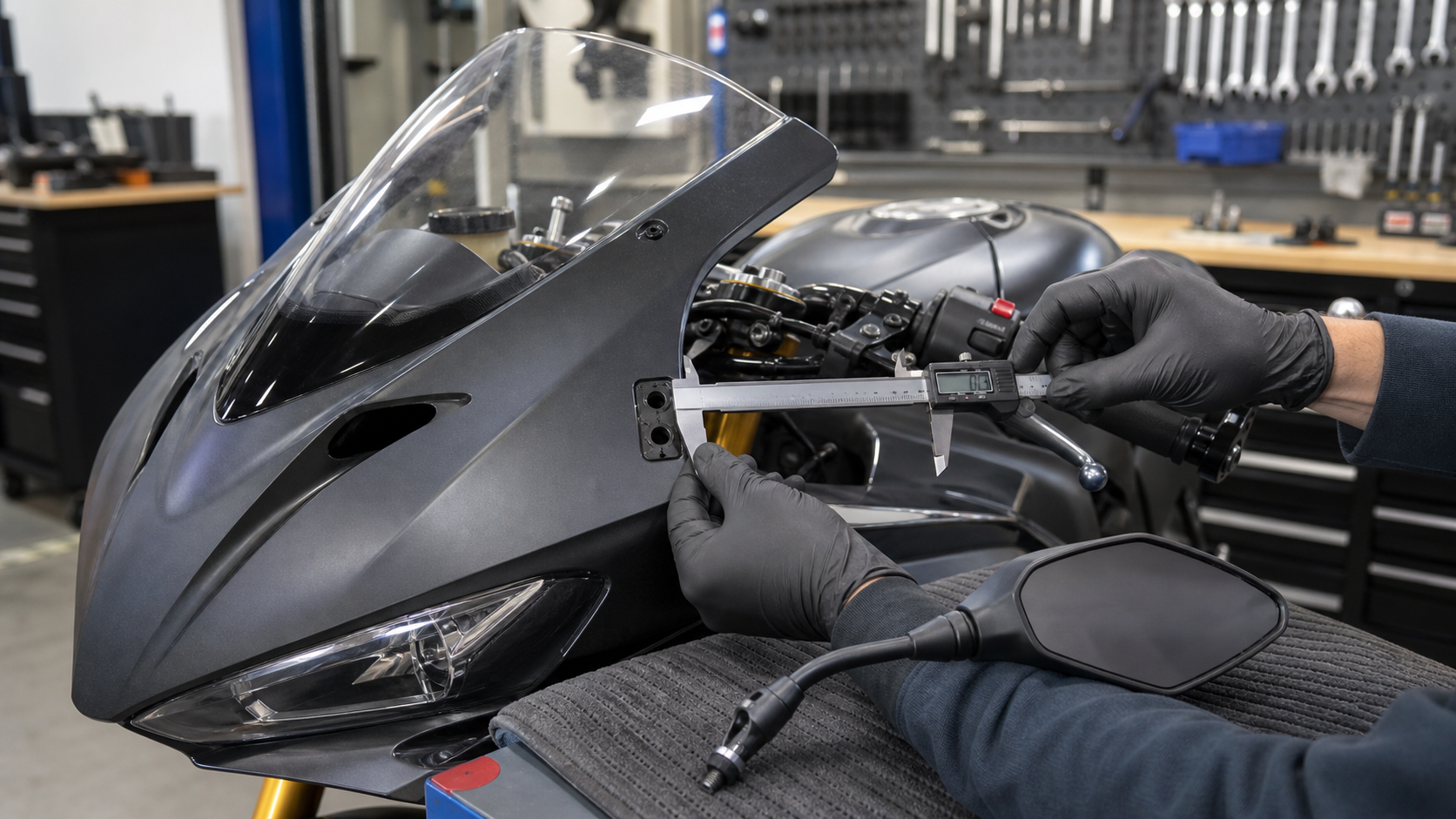
Buy for the exact make, model, year and version—not for a similar silhouette. A fairing can look correct while its mounting holes, intake paths, windscreen edge, inner-panel interfaces or bracket locations differ. Mid-cycle updates and regional variants can also change street equipment. Confirm the motorcycle’s identity from its VIN documentation, owner’s manual or parts catalog before comparing kits.
Next, read the included-parts list as a boundary, not as decoration. A full kit may still exclude the windscreen, inner panels, headlight assembly, mirror brackets, turn signals, ducts, heat shields, grommets or mounting hardware. If the product page does not say whether an item is included, ask before ordering. Do not assume a photo shows every shipped component.
Street-compatible bodywork should clearly explain how factory equipment is retained or transferred. The product should identify the supported model years, included panels and any OEM parts that must move over. Track bodywork should be equally explicit about closed headlight areas, belly-pan design, bracket changes, fastener type and preparation work. “Pre-drilled” does not prove that every hole is final or that a complete test fit can be skipped.
Durability and Repairability Depend on More Than the Label
Neither “track” nor “street” proves that a fairing is more durable. Durability is product-specific and depends on the actual material system, panel geometry, reinforcement around stressed areas, mounting support, installation stress, heat exposure, vibration and use environment. If a panel must be pulled hard into place, a hole is forced sideways onto a bolt, or a tab is carrying load because a bracket is misaligned, stop and resolve the fitment problem before final tightening.
Treat repairability as an ownership question before purchase. Ask whether individual side panels, nose sections, belly pans and tail sections are sold separately; whether the material is identified well enough for a qualified repairer to choose an appropriate process; and whether a replacement panel can be supplied in a compatible finish. A lower purchase price can be offset later if one damaged section requires buying and repainting an entire kit.
This is a conservative buying and inspection framework, not a universal engineering standard. After a crash, have a qualified technician inspect brackets, stay assemblies, mounting bosses and nearby structural or safety-critical parts before reusing the bodywork. Cosmetic damage and safe reinstallation are not the same judgment.
Rider Use-Case Decision Guide
|
Your weekend use
|
Recommended starting point
|
Why
|
Verify before buying
|
|---|---|---|---|
|
Mostly street riding; zero to a few non-competitive track days
|
Model-specific street fairings
|
Keeps the road-equipment interfaces and reduces repeated conversion work
|
Light, mirror, signal, windscreen, duct, heat-shield and hardware provisions
|
|
Street riding plus recurring track days
|
Street set plus a separate track set, if budget and storage allow
|
Separates road equipment from track preparation and limits repeated wear on painted street panels
|
Changeover steps, spare fasteners, bracket compatibility and storage space
|
|
Frequent track days; bike is transported and not used on public roads
|
Model-specific track bodywork
|
Lets the bike be configured around circuit access and the organizer’s technical requirements
|
Current event rules, belly pan, fasteners, brackets, clearances and required safety items
|
|
Formal competition
|
Class-compliant race bodywork selected from the current rulebook
|
A race-style appearance is not evidence of technical eligibility
|
Championship, class, homologation, approved parts and technical-inspection rules
|
Pre-Purchase Fitment and Equipment Checklist
-
Motorcycle identity: exact make, model, model year, trim/version and relevant market specification.
-
Intended use: public road, occasional track day, frequent track use or formal competition.
-
Panel list: every included section is named; product photos are not being used as the only inventory.
-
Street equipment: headlight, turn-signal, mirror, windscreen and license-plate-related provisions are explicitly confirmed where needed.
-
Transferred OEM parts: brackets, ducts, inner panels, grommets, heat shields and hardware are identified.
-
Track requirements: current organizer or class rules have been checked for belly-pan construction, openings, lights, mirrors, fasteners and other equipment.
-
Preparation work: drilling, trimming, bracket changes, quick-release hardware and finishing requirements are disclosed.
-
Test fit: the complete set can be loosely assembled and checked before final tightening, paint correction or track use.
-
Clearance: bodywork clears the front tire and controls through full steering travel and does not contact the exhaust, radiator, hoses, cables or moving parts.
-
Repair path: separate replacement panels, matching finish options and material identification are available or their absence is accepted.
-
Road compliance: applicable local requirements for lamps, signals, mirrors and registration equipment have been checked. In the United States, federal standards separately address motorcycle lamps and replacement lighting equipment and motorcycle rear-view mirrors, while post-sale inspection and road-use obligations can vary by jurisdiction.
Installation Boundaries for Mixed-Use Bikes
Before final tightening, assemble the nose, side panels, lower section, tail and windscreen loosely enough to let the set settle around its mounting points. Confirm panel-to-panel gaps, bracket alignment and fastener engagement without forcing parts together. Then check full steering travel, front-wheel and tire clearance, lever and handlebar clearance, radiator airflow, exhaust clearance, hose and cable routing, and heat protection in the locations specified by the motorcycle or product instructions.
When returning a bike to street use, restore and function-check every required road component for that motorcycle and jurisdiction. That includes lighting, indicators, mirrors, windscreen mounting, license-plate-related hardware and any equipment removed for the track. The Aprilia RS 660 street specification, for example, identifies its standard LED headlights and indicators; another model may package these components differently, including signals integrated into mirrors or bodywork.
Stop the installation and consult the product instructions, the motorcycle service information or a qualified technician if mounting points do not align, a bracket appears bent, wiring is pinched, a panel touches the exhaust or a moving part, steering is restricted, or required lighting cannot be securely installed and tested.
Frequently Asked Questions
Should a weekend sport-bike rider buy track fairings or street fairings?
Choose street fairings when public-road riding is the main use and the bike needs its normal lights, mirrors and road equipment. Choose track fairings when the bike is transported to the circuit, road equipment is unnecessary and the bodywork meets that organizer’s rules. For regular mixed use, separate street and track sets are often the least compromised arrangement.
Can street fairings be used for a track day?
Often yes, but permission and preparation depend on the organizer. Some track days allow street bodywork after specified preparation; others have requirements for lights, mirrors, fasteners, coolant or fluid containment. Read the current event rules instead of assuming competition regulations apply—or do not apply—to a recreational day.
Can track fairings be made street legal by adding lights?
Not automatically. Adding lamps does not prove that the bodywork provides compliant mounting, visibility, mirrors, signals, license-plate equipment, wiring protection or other locally required features. Verify the product’s street-equipment provisions, the motorcycle manufacturer’s requirements and the laws and inspection rules where the bike will be registered and ridden.
Are track fairings easier to repair than street fairings?
Sometimes, but the label alone does not answer the question. Repairability depends on the material, damage location, finish, access to a qualified repair process and whether separate replacement panels are sold. Check those factors before purchase.
Do track fairings always fit without modification?
No. A model-specific track kit may still require product-specific drilling, trimming, brackets or quick-release hardware. Confirm the exact make, model and year, read the installation requirements, and complete a full loose test fit before final tightening.
What should be transferred when installing street fairings?
Only the product instructions and the motorcycle’s parts information can give a complete model-specific list. Common items to verify include lights, mirrors, signals, windscreen, brackets, ducts, inner panels, grommets, heat protection and fasteners. Do not assume they are included with the kit.
Conclusion
Street fairings are the sensible default for a weekend sport bike that still spends most of its time on public roads. Dedicated track bodywork becomes the stronger choice as circuit use becomes more frequent, the motorcycle is transported rather than ridden to the event, and faster access or competition-specific preparation matters. The deciding evidence is exact fitment, supported equipment, installation requirements, repair path and the rules that apply to the bike’s real use—not price or race-style appearance alone.
When you are ready to compare model-specific options, browse Amotopart fairings by brand, model and year, then confirm the included panels, required OEM transfers and installation details on the relevant product page before ordering.