
The best motorcycle windshield for highway comfort is not automatically the tallest one. It is a screen that fits your exact make, model, and year; keeps the road clearly visible from your normal riding position; and redirects airflow without concentrating turbulence around your helmet. For many upright riders, that points toward a taller touring or sport-touring screen. For sportbike riders, a model-specific double-bubble or sport-touring screen may be a better match. The right answer depends on your bike, seated eye height, riding posture, and the airflow you are trying to change.
Start with fitment, then check sight line, shape, width, and mounting hardware. Treat color and styling as the final decision—not the first.
Quick Answer: Which Windshield Type Fits Your Highway Use?
|
Riding situation
|
Good starting point
|
Why it may work
|
What to check
|
|---|---|---|---|
|
Long highway trips in an upright position
|
Taller, wider touring screen
|
More coverage can reduce direct wind pressure on the torso.
|
Top-edge sight line, helmet-level turbulence, mirror and handlebar clearance.
|
|
Sportbike highway riding
|
Model-specific double-bubble or sport-touring screen
|
A raised center can add coverage while staying closer to a sportbike profile.
|
Comfort both tucked and upright, exact fairing fit, bolt-hole alignment.
|
|
Mixed city and highway use
|
Medium-height or adjustable screen
|
Balances everyday visibility with added wind protection.
|
Adjustment range, mounting stability, clear view in every position.
|
|
Rider who is shorter or sits low
|
Lower or medium screen
|
Helps keep the top edge below the normal line of sight.
|
Seated eye height—not standing height alone.
|
|
Tall rider or tall seat
|
Taller or adjustable screen
|
May move airflow above the chest and shoulders more effectively.
|
Whether the airflow ends at the helmet instead of passing above it.
|
These are starting points, not universal guarantees. Two riders of the same height can sit at different eye levels because of seat height, torso length, posture, and suspension setup.
1. Fitment Comes Before Height
A windshield is part of the motorcycle’s front structure, not just a flat piece of plastic. Its mounting holes, lower profile, curvature, brackets, and clearances must match the bike. That is why reputable fitment tools begin with make, model, and year. National Cycle’s official fitment guidance also tells riders to verify the motorcycle’s make, model, and year before choosing a screen.
Amotopart currently lists both model-specific windshields and universal windshields. A model-specific product title may name an exact motorcycle and year range, while a universal screen may depend on handlebar diameter, bracket style, or another mounting condition. “Universal” therefore means a broader mounting concept—not confirmed compatibility with every motorcycle.
Fitment checklist before buying
-
Match the motorcycle make, model, variant, and production year.
-
Compare the product photos with the existing fairing and mounting points.
-
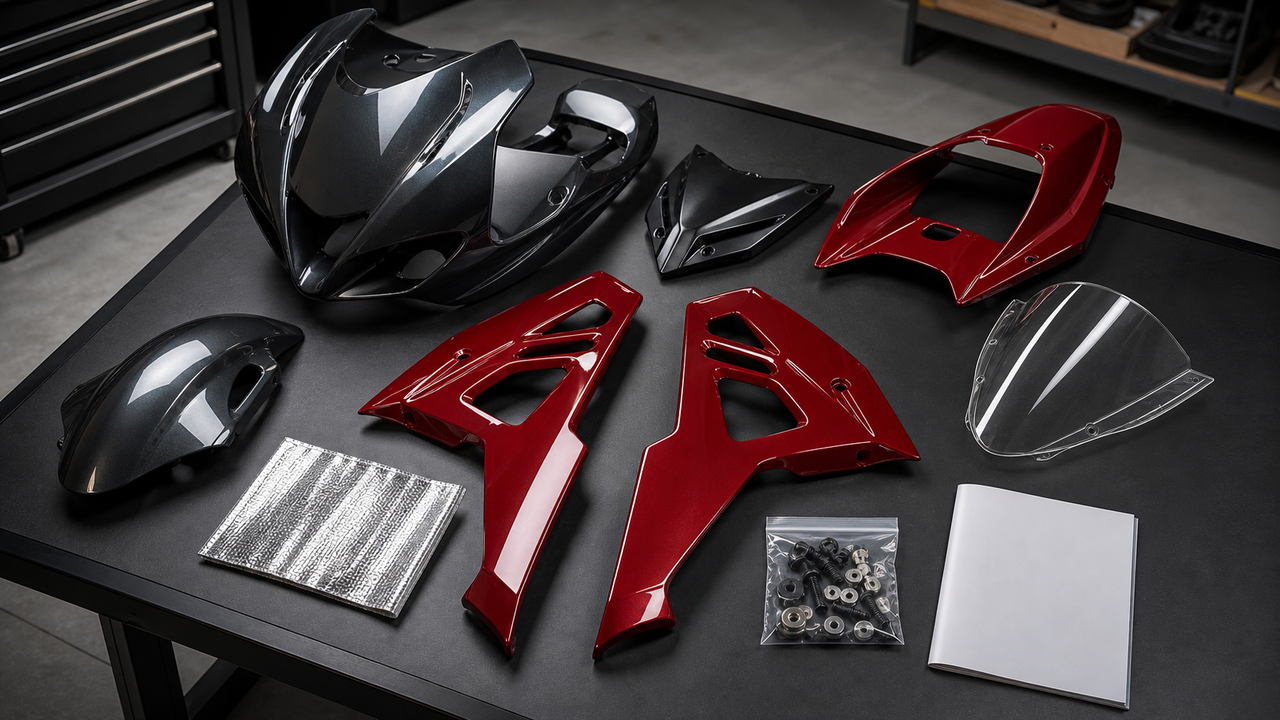
Confirm whether the screen reuses original hardware or includes a bracket, bolts, well nuts, or other mounting parts.
-
Check clearance around mirrors, handlebars, hand guards, instruments, and cables through the full steering range.
-
Verify whether aftermarket handlebars, risers, mirrors, fairings, or accessories change the fit.
-
Read the exact product page and installation instructions; do not rely on a collection-page thumbnail alone.
If the fitment description is incomplete or contradictory, ask the seller before ordering. Guessing from the motorcycle’s appearance is not a reliable compatibility check.
2. Choose Height From Your Seated Sight Line
Windshield height should be judged while you are seated in your normal riding posture. National Cycle describes a commonly used setup rule: the rider should be able to look just over the top of the screen and see the road about 50 feet ahead. The same guide notes that the top edge often ends near the tip of the nose or slightly below eye level, although personal preference and motorcycle geometry still matter.
This rule is useful because weather, dirt, insects, scratches, and glare can make looking through a screen less comfortable than looking over it. A screen that is too high for one rider may be appropriate for another rider with a taller seated eye position.
A simple garage check
-
Place the motorcycle upright on stable ground.
-
Sit in your normal highway posture while wearing your usual helmet.
-
Look naturally toward the road ahead rather than stretching your neck.
-
Estimate where the proposed screen’s top edge will sit relative to your view.
-
If the screen is adjustable, repeat the check at every likely position.
Mounted height matters more than the product’s uninstalled dimensions. The same screen can sit differently on different brackets or motorcycles.
3. Match the Shape to Your Riding Posture
Touring screens are generally taller and may also be wider. They are the logical first category for sustained highway speeds, long-distance riding, and an upright posture. More area can reduce direct wind pressure on the torso, but a larger screen can still be uncomfortable if its airflow ends at helmet level.
Sport-touring screens aim to add wind coverage without turning a sportbike into a full touring setup. Zero Gravity describes its Sport Touring series as designed to reduce windblast for riders in a more upright position. This makes the category worth considering when a stock sport screen feels too low during highway use.
Double-bubble screens use a raised or stepped center profile. They are commonly associated with sportbikes because the center section can create more room behind the screen while preserving a narrower outer shape. They can be useful for riders who alternate between a tuck and a more upright highway posture, but the result still depends on rider height and the specific motorcycle.
Adjustable screens and clip-on deflectors offer another way to tune airflow. Their advantage is flexibility; their tradeoff is additional hardware and more variables to check. Make sure the adjustment mechanism is secure, the screen remains clear of controls, and every position preserves a safe view.
4. Width and Airflow Matter as Much as Height
A highway screen should be evaluated by where it sends the air—not only by how much surface area it has. Height influences airflow above the torso, while width and side shape influence the shoulders, arms, and hands. Some model-specific touring screens use side profiles or deflectors to move air outward, but those results should only be claimed when the manufacturer provides data for the exact screen and motorcycle.
Pay attention to the difference between wind pressure and buffeting. A screen can reduce steady pressure on the chest yet create pulsing air around the helmet. Because rider posture, helmet shape, mirrors, luggage, and surrounding traffic all affect airflow, no product page can guarantee a silent or turbulence-free ride for every rider.
After installation, test the motorcycle progressively and safely. If you notice new vibration, visual distortion, steering interference, or strong helmet buffeting, stop and recheck the mounting, angle, and fitment.
5. Compare Materials by the Exact Product Specification
Motorcycle windshields are commonly sold in acrylic or polycarbonate-based materials, sometimes with proprietary coatings. These terms are not interchangeable. National Cycle’s material guide explains that polycarbonate needs a hard coating for abrasion resistance and optical service, while acrylic has different clarity, mounting, and impact characteristics. The practical lesson is simple: do not assume that every screen with the same shape has the same material performance.
Check the exact product page for:
-
stated material;
-
surface or hard-coating information;
-
screen thickness, if supplied;
-
clear, smoke, or other finish;
-
included hardware and bracket material;
-
care and cleaning instructions.
Specifications can vary by listing. Verify the exact SKU you intend to buy rather than applying one product’s description to the entire catalog.
Buyer Cautions: Six Mistakes to Avoid
-
Buying by height alone. A taller screen can move turbulence from the chest to the helmet.
-
Using standing height as the only measurement. Seated eye height and posture are more relevant.
-
Assuming “universal” means confirmed fit. Verify mounts, dimensions, and clearances.
-
Ignoring included hardware. A screen that needs a separate bracket or well-nut kit changes the real purchase requirement.
-
Choosing tint before checking visibility. Consider how the finish affects your view in the conditions where you ride, and check applicable local rules.
-
Ordering before reading the current return terms. Fitment mistakes can be expensive to reverse. Review the seller’s current return and refund policy before purchase.
How to Shop for a Highway Windshield on Amotopart
Amotopart’s official site includes model-specific collections such as Honda and Yamaha windshields, broader body-and-appearance listings, and universal windshield products. Use those collections to narrow the catalog, but make the final decision from the exact product page.
A practical workflow is:
-
Search by motorcycle make, model, and year.
-
Open the exact product page and verify the stated fitment range.
-
Check whether the screen is touring, sport-touring, double-bubble, standard replacement, adjustable, or universal.
-
Confirm material, finish, dimensions, and included hardware only from that SKU’s description.
-
Compare the proposed top edge with your seated sight line.
-
Read the current return, refund, shipping, and warranty information before ordering.
Choose the product and seller that provide verified fitment, sufficient specifications, suitable airflow coverage, and terms that match your motorcycle and risk tolerance.
Frequently Asked Questions
Is a taller motorcycle windshield always better for highway riding?
No. A taller screen may reduce chest-level wind pressure, but it can also place the top edge in the rider’s view or move turbulence toward the helmet. Choose height from your seated sight line and normal posture.
Should I look through or over a motorcycle windshield?
A commonly used guideline is to see the road over the top edge of the screen from your normal seated position. National Cycle suggests a sight point around 50 feet ahead. Treat this as a sizing reference, not a substitute for the motorcycle and windshield manufacturer’s instructions.
Is a double-bubble windshield good for highway use?
It can be a good option for a sportbike when the rider wants more central coverage than a low stock screen. It is not automatically the best choice for every riding posture, and it must match the exact motorcycle’s fairing and mounts.
What is the best windshield for an upright rider?
A model-specific touring or sport-touring screen is a sensible starting point because these shapes are designed to provide more coverage in an upright position. Final comfort depends on rider height, seat position, width, angle, and helmet-level airflow.
Can I install a universal motorcycle windshield?
Only if its mounting system, dimensions, and clearances are compatible with your motorcycle. Confirm handlebar or bracket requirements and check full steering movement before riding.
Will a windshield eliminate highway wind noise?
No windshield can guarantee that. Wind noise and buffeting also depend on the helmet, rider position, screen angle, mirrors, luggage, surrounding traffic, and weather. A better-fitting screen may improve airflow, but “silent riding” is not a realistic universal promise.
What should I verify on an Amotopart product page?
Verify the exact make, model, year range, material, finish, dimensions, included bracket or hardware, installation notes, and current shipping and return terms. If any of those details are missing, contact Amotopart before ordering.
Conclusion
The best highway windshield is the one that works as a complete fitment and airflow system. Begin with the exact motorcycle, set the screen height from your seated view, choose a shape for your riding posture, and verify the material and hardware on the specific product page. A carefully matched medium screen can be more comfortable than an oversized screen that blocks the view or directs turbulence at the helmet.