
If you are choosing replacement bodywork for a street motorcycle, an occasional track-day bike, or a dedicated race build, the material name alone is not enough to make the decision. ABS and fiberglass fairings are sold in many different constructions and configurations. What matters is whether the exact kit matches your motorcycle, retains the equipment you need, includes the expected hardware, and complies with the rules for where you plan to ride.
For most street-first riders, a model-specific ABS kit is the more direct shopping path because it is designed around production-motorcycle mounting points and street-bodywork shapes. A dedicated track build may justify purpose-built race bodywork, but the buyer still has to verify the material specification, panel layout, mounting method, finishing work, and event rules. There is no responsible universal answer that every ABS kit is better for the street or every fiberglass kit is better for the track.
Quick Answer: Choose the Use Case Before the Material
Use this short decision rule:
-
Street commuting or weekend road riding: start with a kit listed for the exact make, model, and model year. Confirm that the openings, brackets, lights, mirrors, and other road equipment match your motorcycle.
-
Street bike that attends occasional track days: decide whether you want to keep the street equipment installed or maintain a second bodywork set. Ask the organizer what must be removed, taped, secured, or replaced before the event.
-
Dedicated closed-course motorcycle: compare race-bodywork specifications rather than buying on “fiberglass” alone. Confirm the lower section, fastener system, mounting points, finish, and repair plan with the supplier and your race organization.
The purpose of the motorcycle comes first. Material is one part of the specification, not a substitute for fitment or rules verification.
What Amotopart Currently Documents About Its ABS Fairings
Amotopart’s current Product & Fitment FAQ states that its fairings are made from ABS plastic and come pre-drilled. The same page also says minor adjustments may be needed when a motorcycle has model variations or previous modifications. That qualification is important: “pre-drilled” does not mean every used motorcycle, bracket, or aftermarket accessory will align without inspection.
The FAQ also instructs buyers to use the compatibility information on the product page and to provide a VIN or a clear photo of the original part when they are unsure. This is the most reliable fitment sequence for an online purchase:
-
Identify the exact motorcycle model, model year, and market version.
-
Check the compatibility range on the specific product page, not only the collection title.
-
Compare the product photos and panel list with the bodywork currently on the motorcycle.
-
Disclose non-stock brackets, lighting, exhaust parts, frame sliders, or previous repairs.
-
Request written fitment confirmation when any detail is uncertain.
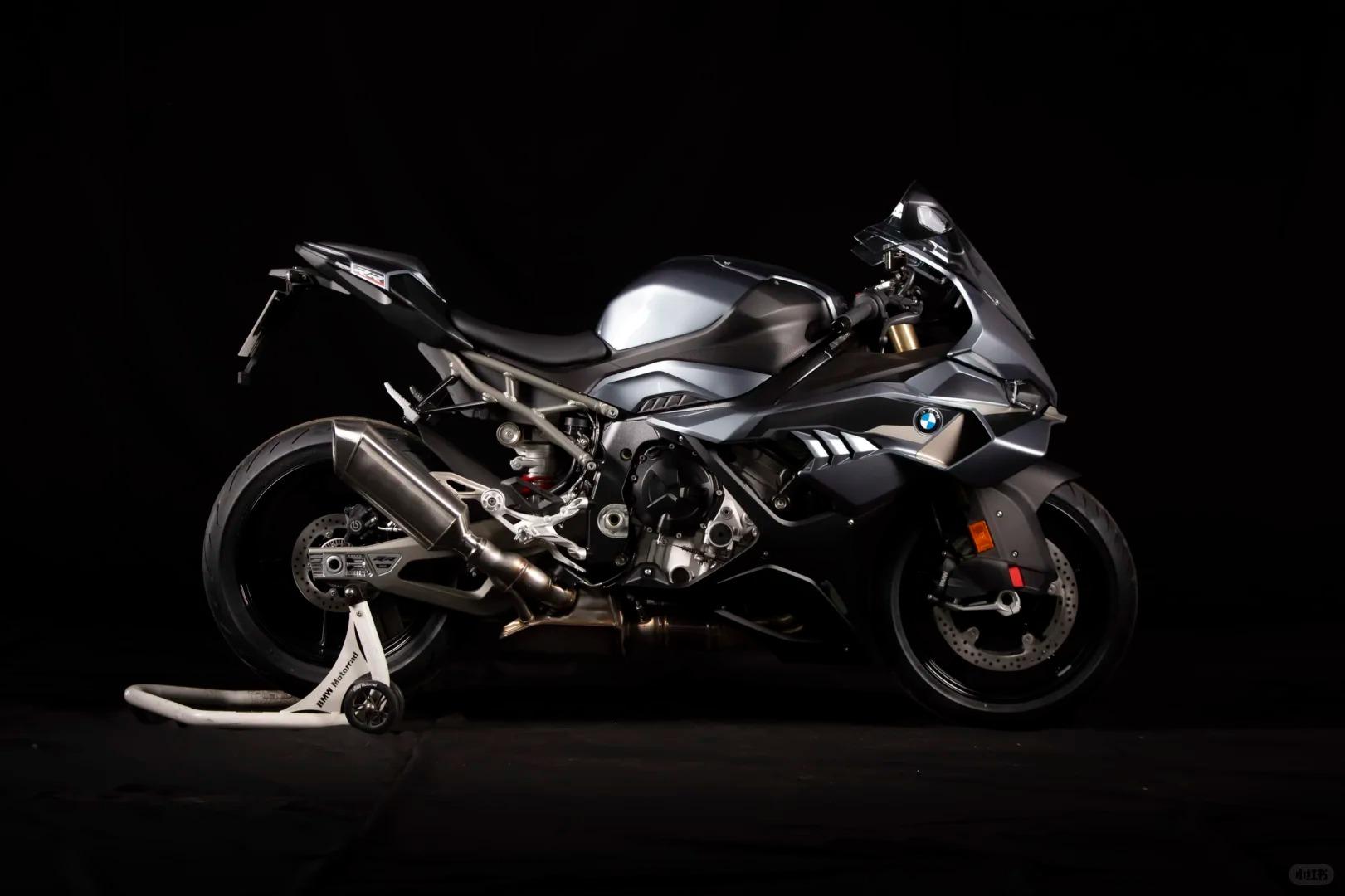
This matters on motorcycles with several bodywork generations. The current Yamaha R6 fairing collection, for example, separates listings into multiple year groups and also distinguishes some R6 and R6S applications. The current BMW S1000RR fairing collection likewise contains different year ranges. Those collection labels help narrow the search, but the final decision should still be based on the exact SKU and motorcycle.
What the ABS Label Does Not Prove by Itself
A responsible comparison should not turn a material name into a performance guarantee. Unless the exact product page or supplier documentation says otherwise, “ABS” alone does not prove:
-
the weight of the complete installed kit;
-
equivalence to original-equipment wall thickness, tolerances, or finish;
-
a specific number of paint or clear-coat layers;
-
a defined UV, chemical, impact, or high-speed test result;
-
compatibility with every exhaust, lighting, bracket, or frame-slider setup;
-
approval for a particular track-day organizer or racing class.
The same principle applies to fiberglass. The word can describe bodywork with different fibers, resins, layups, thicknesses, reinforcement points, fastener arrangements, and finishing requirements. Do not assume that every fiberglass kit is lighter, easier to repair, supplied unpainted, or built for quick-release hardware. Those are product-level claims that must be verified with the manufacturer of the exact kit.
Street-First Riders: Prioritize Fitment, Equipment, and Serviceability
For a motorcycle that remains road registered, begin with the equipment the bike must keep. Check the headlight and taillight openings, turn-signal arrangement, mirror mounting points, windscreen, ducts, inner panels, seat surrounds, and license-plate hardware. A bodywork set that requires extensive fabrication to restore these functions may not be the practical choice even if the raw panels are inexpensive.
Also inspect the motorcycle before ordering. Used sportbikes frequently have bent brackets, missing rubber well nuts, substituted fasteners, aftermarket exhausts, or evidence of an earlier tip-over. New panels cannot correct a distorted mounting structure. Photograph both sides of the motorcycle and the mounting points before removing the old bodywork; these photos provide a useful reference during installation and help a supplier evaluate a fitment question.
Amotopart’s FAQ says a fairing kit includes the main panels and currently lists a bolt kit, windscreen, and heat shield, while also telling customers to confirm the contents of the specific kit. Follow that last instruction. A collection page is not a packing list, and the required inner pieces can differ by motorcycle generation.
Occasional Track Days: Verify the Organizer’s Rules
An ABS street kit can be used on a motorcycle that attends a track day if the kit fits securely and the organizer accepts the motorcycle’s preparation. That does not mean a street kit is certified for every event. Requirements for lights, mirrors, coolant, fasteners, lower bodywork, safety wire, number panels, or inspection can vary by organizer, class, and venue.
Ask the track-day provider for its current technical checklist before modifying the motorcycle. If you are preparing for sanctioned competition, use the regulations for the exact series and class. MotoAmerica, for example, publishes current documents through its Competitor Information hub. Those competition documents should not be treated as the universal rules for an informal track day; they illustrate why event-specific verification is necessary.
A rider who uses the same motorcycle on the street and track should also consider the operational cost of each setup. Repeatedly removing painted street panels can add labor and cosmetic risk. A second bodywork set may simplify preparation, but it also adds storage, mounting hardware, finishing work, and setup time. Compare the complete workflow rather than only the panel price.
Dedicated Track Builds: Ask Better Questions About Fiberglass
Fiberglass race bodywork can be a logical category to investigate for a closed-course motorcycle, but the purchase should be driven by a specification checklist:
-
Construction: What fiber, resin system, reinforcement, and approximate finished weight are documented?
-
Panel configuration: Is the lower section designed for the fluid-containment requirement of your class?
-
Mounting: Are holes drilled, marked, or completely unfinished? Which brackets and quick-release fasteners are required?
-
Finish: Does the kit arrive painted, primed, gel-coated, or as raw bodywork?
-
Repair: Does the supplier provide a compatible repair procedure and materials?
-
Replacement parts: Can individual panels be purchased after damage?
Without these answers, “race fiberglass” is too broad to support a meaningful comparison. A race build should be checked as a complete system: bodywork, fasteners, brackets, controls, cooling, exhaust clearance, safety equipment, and rule compliance.
A Safer Fitment Workflow for New Fairings
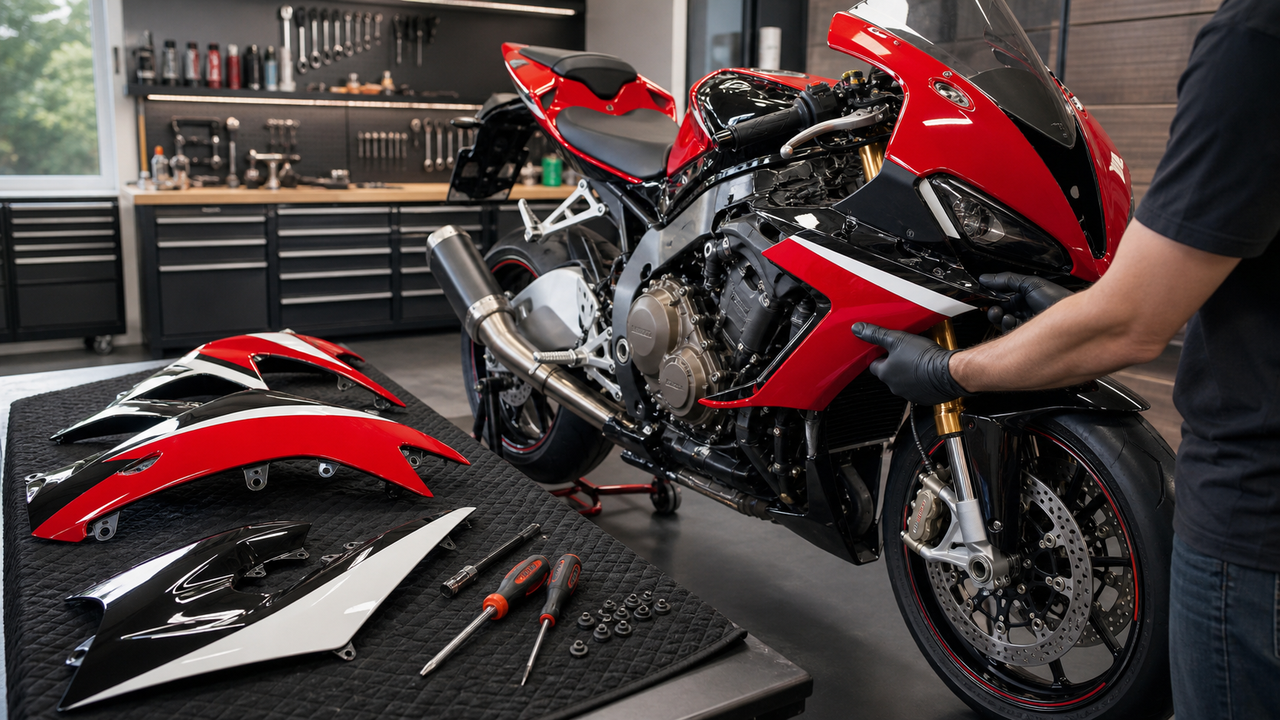
Regardless of material, do not begin by forcing panels or permanently altering them. A staged fitment process protects both the new bodywork and your return options:
-
Inventory the shipment. Compare every panel and hardware item with the product description. Photograph damage, finish defects, or missing items before installation.
-
Inspect the motorcycle. Check brackets, rubber mounts, clips, wiring, hoses, and accessories. Repair bent or damaged mounting hardware first.
-
Dry-fit the complete assembly. Position panels with fasteners loose enough to allow alignment. Confirm gaps, clearances, wiring routes, steering movement, and exhaust proximity.
-
Stop when alignment requires force. Recheck the model year, neighboring panels, and bracket position. Contact the supplier before drilling, cutting, heating, or bending anything.
-
Use the motorcycle service information. Fastener type, tightening sequence, and torque are motorcycle-specific. Do not apply a generic torque number from an article to every plastic mounting point.
-
Complete a stationary inspection. Verify that the bars move lock to lock, controls operate normally, nothing touches hot or moving parts, and all panels are secure before riding.
Amotopart’s FAQ asks customers with a fitment problem to provide the order details, VIN, motorcycle make/model/year, and clear photos or video. Keeping an installation record makes that process easier.
Return and Customization Boundaries to Check Before Installation
Dry-fitting before irreversible modification is also a policy issue. Amotopart’s current Return & Refund Policy describes a 60-day request window and requires eligible items to be unused and in their original packaging. It also lists a 30% restocking fee and says some custom or special-order products may not be returnable. Read the current policy for the exact order before drilling, trimming, installing heat shielding, or riding with the panels.
If you order a custom design, confirm the model and panel configuration before approving production. A finished-design photo can help verify colors, graphics, and visible completeness, but it cannot prove fitment on your motorcycle. Fitment confirmation and design approval are two different checkpoints.
Purchase Checklist
-
Exact make, model, model year, and market version confirmed
-
Specific SKU compatibility reviewed
-
Current motorcycle brackets and accessories disclosed
-
Panel list, windscreen, hardware, and heat shielding confirmed for that kit
-
Street-equipment openings or race-panel configuration confirmed
-
Finish and customization details approved in writing
-
Track-day or racing rules checked with the organizer
-
Return, restocking, and custom-order restrictions reviewed
-
Dry-fit planned before irreversible modification
Frequently Asked Questions
Is ABS automatically the best fairing material for street use?
No material is automatically best. A model-specific ABS kit is often a practical starting point for a street motorcycle, but fitment, retained equipment, finish, hardware, and supplier support still need to be checked at the SKU level.
Is fiberglass automatically better for every track bike?
No. A dedicated race motorcycle may benefit from purpose-built bodywork, but “fiberglass” does not define the weight, layup, mounting system, repair method, or rule compliance. Verify the exact kit and the exact event requirements.
Can Amotopart ABS fairings be used for a track day?
Amotopart’s current FAQ describes its ABS fairings as suitable for street riding and track use. The event organizer still decides whether the motorcycle’s preparation is acceptable. Confirm the specific kit, mounting security, clearances, and the organizer’s current technical checklist.
Do pre-drilled fairings guarantee a no-adjustment installation?
No. Amotopart’s FAQ says the fairings are pre-drilled but also notes that minor adjustments may be needed for model variations or previously modified motorcycles. Inspect the motorcycle, dry-fit the full set, and request support before making permanent changes.
Final Recommendation
Choose bodywork by verification depth, not by a material stereotype. Street-first riders should start with an exact-year kit that preserves the required road equipment. Occasional track-day riders should add the organizer’s preparation checklist to the decision. Dedicated racers should compare complete race-bodywork specifications and class rules.
If you are considering an Amotopart kit, browse the relevant model collection, open the exact product page, and request fitment confirmation when the motorcycle’s history or configuration is uncertain. A documented match, a complete dry-fit, and a policy check are more valuable than any unsupported promise of “perfect” fitment or universal performance.