
TL;DR
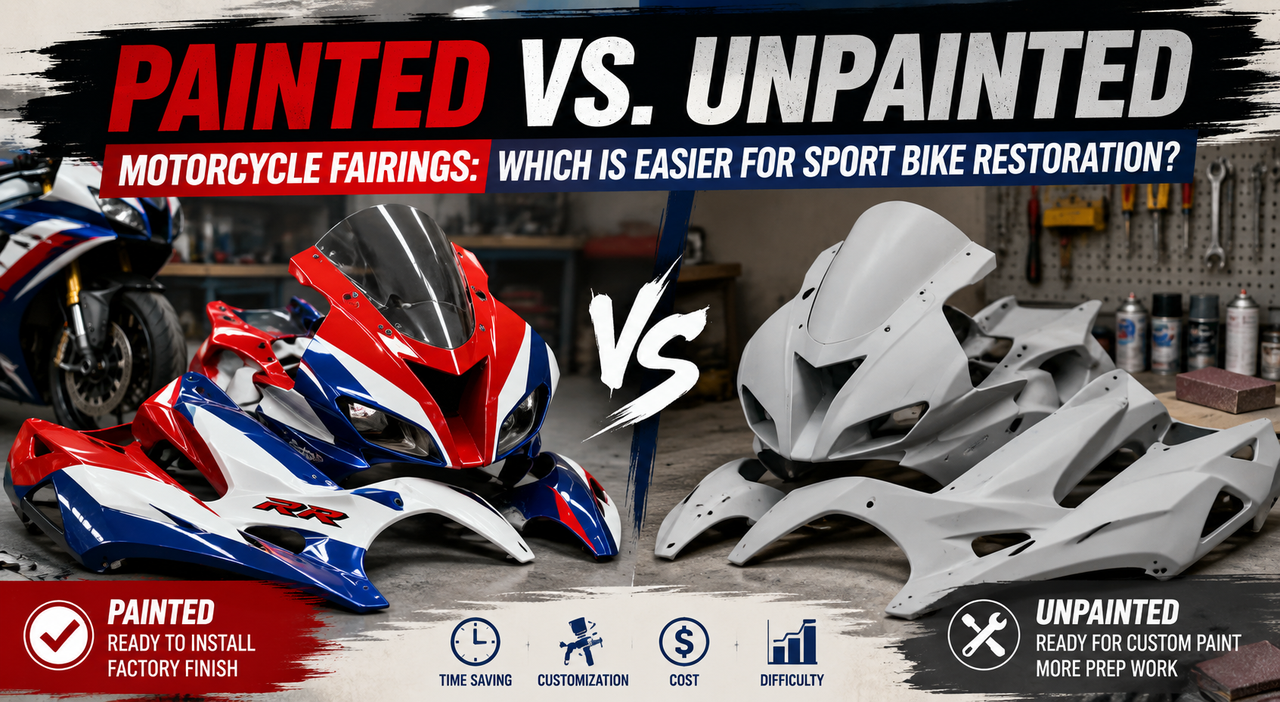
ABS fairings are usually the more practical choice for a street motorcycle when the buyer wants model-specific, pre-painted replacement bodywork with provisions for road equipment. Fiberglass fairings are commonly chosen for dedicated track motorcycles because race bodywork can be configured around racing requirements and repaired with fiberglass cloth and resin after damage.
Neither material is automatically lighter, stronger, better fitting, or more durable. Those results depend on the plastic formulation or fiberglass layup, panel thickness, reinforcement, mold accuracy, finish, installation, and the condition of the motorcycle. Choose the product for its intended use and documented specifications, not from the material name alone.
Key Takeaways
-
Choose ABS for a street-focused replacement when you need a finished kit that retains lights, mirrors, and other road equipment.
-
Choose fiberglass race bodywork when the motorcycle is primarily used on track and the product is built for the applicable rules and configuration.
-
Do not assume fiberglass is always lighter or ABS is always more impact-resistant; construction details determine the actual result.
-
Fitment depends on the exact model year, mounting hardware, brackets, and previous repairs as much as it depends on the panel.
-
Compare total installed cost, including paint, drilling, hardware, heat shielding, shipping, and labor.
-
Dry-fit the complete set before final tightening and verify steering, lighting, tire, radiator, engine, and exhaust clearance.
Quick Comparison
|
Decision factor
|
ABS street fairings
|
Fiberglass race fairings
|
|
Typical use
|
Street replacement, cosmetic restoration, custom road bike
|
Track-day or competition motorcycle
|
|
Finish at purchase
|
Often available pre-painted; exact offering varies
|
Often supplied in gel coat or primer and prepared for race paint; exact offering varies
|
|
Road equipment
|
Usually designed around original lights, mirrors, windscreen, and mounting points
|
May omit or alter provisions for street equipment
|
|
Fitment work
|
Can be pre-drilled, but dry-fitting and minor adjustment may still be required
|
May require drilling, trimming, fasteners, and track-specific assembly
|
|
Repair approach
|
Plastic welding, compatible adhesives, reinforcement, refinishing, or panel replacement
|
Fiberglass cloth and resin repair, followed by sanding and refinishing
|
|
Weight
|
Depends on panel design, thickness, and included pieces
|
Can be lightweight, but layup and reinforcement determine actual weight
|
|
Best buying metric
|
Correct fitment, complete kit contents, finish, and support
|
Rule compliance, fitment, layup quality, reinforcement, and repairability
|
What Are ABS and Fiberglass Fairings?
ABS, short for acrylonitrile butadiene styrene, is a thermoplastic. Motorcycle panels made from ABS can be formed into complex shapes and painted for street use. The material can flex under some loads, but its behavior varies with formulation, wall thickness, geometry, temperature, age, and manufacturing quality.
Fiberglass bodywork is a composite made from glass-fiber reinforcement and resin. Its stiffness, weight, surface quality, and resistance to damage depend on the fiber type, resin system, number and orientation of layers, reinforcement around mounting points, and curing process. The word "fiberglass" therefore describes a material family rather than one fixed performance level.
That distinction matters because two ABS kits can behave differently, just as two fiberglass kits can. A well-supported mounting tab and an accurately positioned hole may matter more in daily use than a generic claim about the material.
Why ABS Is Usually the Practical Street Choice
A street motorcycle needs bodywork that works with headlights, indicators, mirrors, air ducts, inner panels, heat shielding, and factory-style mounting points. Buyers also tend to want a finished appearance without coordinating a separate drilling, preparation, and paint project. Model-specific ABS kits often address those requirements in one package.
ABS can tolerate some flex during fitting and everyday use, which can help around complex panel joints and rubber-mounted fasteners. That does not make every ABS panel resistant to every impact. A hard crash, an overtightened bolt, a missing grommet, poor hole placement, low temperature, or continuous installation stress can still crack the material.
For a road bike, the practical advantages of an ABS kit are usually:
-
Availability in model- and year-specific shapes.
-
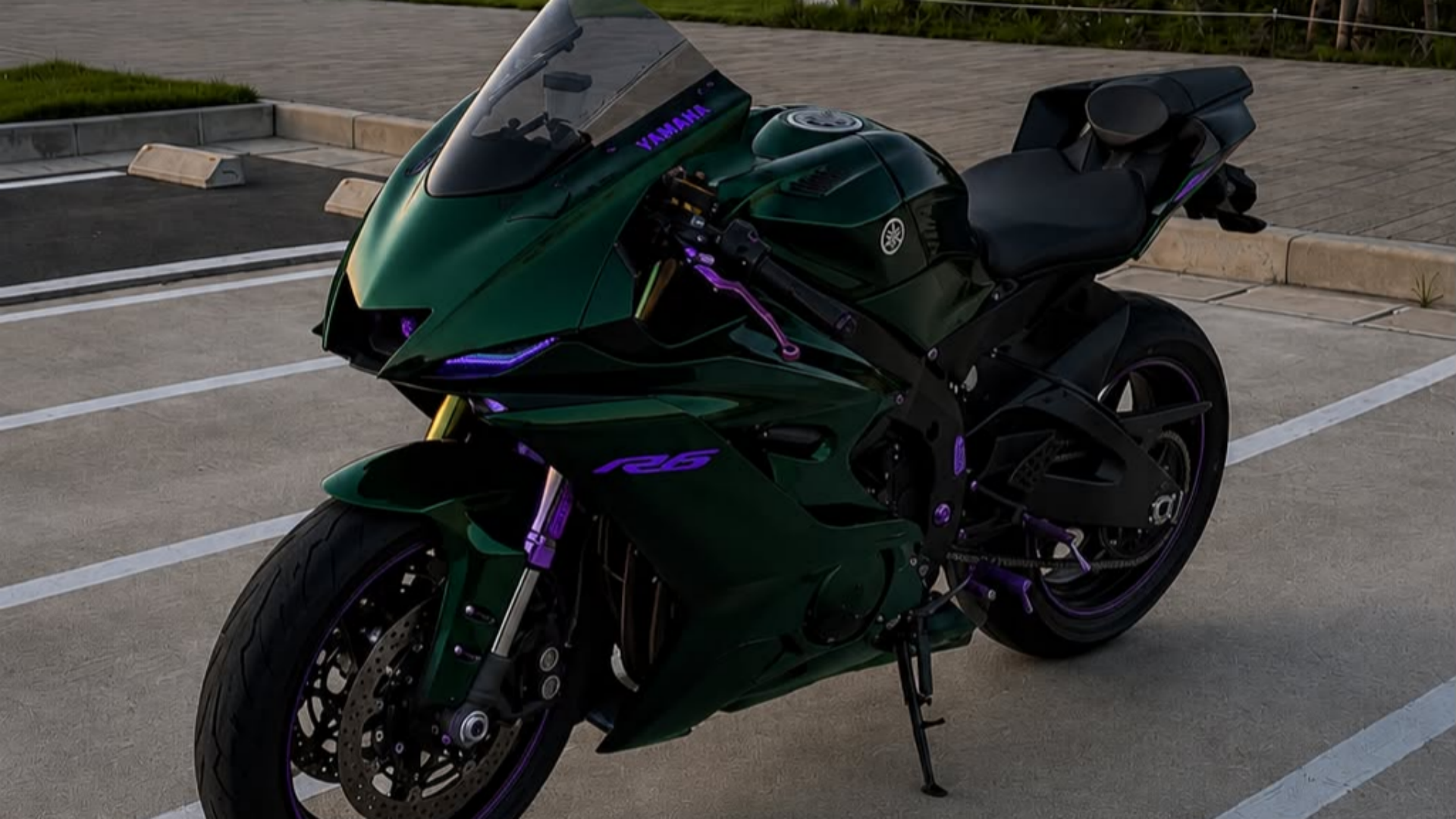
Pre-painted designs and factory-inspired color schemes.
-
Provisions for original road equipment.
-
A package that can include hardware, a windscreen, and heat protection.
-
Less preparation than raw race bodywork when the listing is accurate and the motorcycle is undamaged.
These are product-category advantages, not guarantees. The individual listing should still define compatible years, included parts, finish, and any modification required.
Why Fiberglass Remains Important for Track Motorcycles
Fiberglass is widely used for race bodywork. Manufacturers such as Pro Fiber offer fiberglass race fairings, tail units, air intakes, and related track components across many motorcycle brands. These products are designed around a different workflow from pre-painted street kits.
A race fairing set may use fewer pieces, quick-release fasteners, a solo tail, closed light openings, a different lower section, or additional local reinforcement. Fiberglass can also be repaired by adding compatible cloth and resin, then sanding and refinishing the damaged area. That repair process is useful for a track motorcycle where cosmetic perfection may be less important than returning the bike to service.
However, fiberglass is not automatically the correct track choice merely because it is fiberglass. A race bodywork package must fit the motorcycle and comply with the organizer's rules. Current 2026 FIM circuit-racing regulations, for example, contain detailed requirements for bodywork shape, dimensions, air ducts, lower fairings, openings, fasteners, and permitted reinforcement. Local clubs and track-day providers may use different rules, so check the applicable rulebook before buying or modifying panels.
Material Alone Does Not Decide Fitment
Fitment is a system. It depends on the mold, tabs, holes, panel interfaces, brackets, grommets, fasteners, and the motorcycle itself. A product can be made from a suitable material and still fit poorly if its dimensions are inaccurate. A precisely made panel can also appear misaligned when a fairing stay was bent in a previous crash.
A pre-drilled hole reduces installation work; it does not guarantee zero adjustment. Before installing any bodywork:
-
Confirm the exact make, model, year, and variant.
-
Inspect the fairing stay, subframe, side brackets, tabs, and rubber mounts.
-
Check whether non-stock lights, mirrors, exhausts, windscreens, or air ducts affect compatibility.
-
Start all fasteners by hand and leave them loose during the initial dry fit.
-
Align the complete assembly before tightening any one panel.
For Amotopart products, the company's official FAQ says fairings are made from ABS and pre-drilled according to OEM specifications. It also says minor adjustments may be needed when a motorcycle has model variations or previous modifications. If fitment is uncertain, buyers can provide the VIN or a photo of the original part for verification.
Paint, UV Exposure, and Long-Term Appearance
Paint durability is not determined by ABS versus fiberglass alone. Surface preparation, primer compatibility, color application, graphics, clear coat, curing, cleaning products, fuel exposure, road debris, and sunlight all influence the finish.
A pre-painted ABS kit can reduce project time, but a new finish may not perfectly match an older fuel tank or an adjacent factory panel that has faded. A fiberglass race kit may arrive in gel coat or primer and require preparation before paint. Neither material creates an automatic color match.
Before ordering a pre-painted set, ask:
-
Is the design based on a factory color, a visual reference, or a custom color code?
-
Are graphics placed under or over the clear coat?
-
Can finished-product photos be reviewed before shipment?
-
Will complex graphics, uncommon colors, or revisions change the price or schedule?
-
Can one matching replacement panel be supplied later?
Amotopart's FAQ says standard color, logo, pattern, and graphic adjustments can be requested without an added charge, while complex designs or uncommon materials may cost more. The company also says completed-fairing photos are sent for approval before shipment. Confirm the current terms for the selected product.
Heat, Vibration, and Fastener Stress
Both ABS and fiberglass fairings need correct clearance from the exhaust, engine, radiator, tires, controls, and moving suspension components. An overheated ABS panel can soften or distort. A fiberglass panel and its finish can also be damaged by excessive heat. Material choice does not replace heat shielding or correct installation.
Fastener stress is another common failure source. Overtightening can damage either material around a mounting hole. Missing rubber mounts, incorrect washers, forced alignment, and loose hardware can concentrate loads or allow vibration. Use model-specific service information and the correct hardware rather than one generic torque value for every fairing fastener.
Repairability: Both Materials Can Be Repaired
Fiberglass is well suited to laminate repair. A damaged area can often be cleaned, prepared, reinforced with glass cloth and compatible resin, then sanded and refinished. The quality of the repair depends on access, contamination, the original layup, and the technician's skill.
ABS is not necessarily disposable. Depending on the damage and plastic, repair options can include plastic welding, compatible adhesives, reinforcement, reshaping, filling, sanding, and repainting. A broken or missing mounting tab may be harder to restore accurately than a simple crack. For either material, compare repair cost and structural confidence with the cost of a replacement panel.
Compare Total Installed Cost, Not Only Purchase Price
A low advertised price can hide required preparation. Compare the complete project:
-
Body panels and all model-specific pieces.
-
Windscreen, fasteners, clips, grommets, heat shielding, and brackets.
-
Drilling, trimming, surface preparation, primer, paint, graphics, and clear coat.
-
Shipping, taxes, duties, and delivery time.
-
Professional installation or paint labor.
-
Replacement of bent or missing motorcycle hardware.
-
The warranty, fitment-resolution process, and availability of individual replacement panels.
Amotopart's general FAQ says its complete fairing kits include the main fairing panels and that a bolt kit, windscreen, and heat shield are included at no extra charge. The exact product page should remain the controlling reference because kit composition can vary by motorcycle.
Installation Workflow for Replacement Fairings
-
Document the original assembly. Photograph panel overlaps, fasteners, wiring, ducts, and heat shielding.
-
Inspect the motorcycle. Check brackets, mounting points, grommets, lights, and previous crash repairs.
-
Inventory the kit. Compare every panel and accessory with the product listing before installation.
-
Transfer required components. Move lamps, vents, ducts, insulation, clips, and mounts carefully.
-
Dry-fit the complete set. Start fasteners by hand and leave them loose while aligning panel interfaces.
-
Install heat protection. Apply or transfer shielding in the intended locations and verify heat-source clearance.
-
Check operation. Test steering lock, controls, lights, mirrors, and clearance around tires and suspension.
-
Tighten correctly. Follow model-specific service information and avoid crushing panels around mounting holes.
-
Reinspect after use. Check fasteners, gaps, heat exposure, and contact marks after the first rides or track sessions.
Frequently Asked Questions
Are ABS fairings better than fiberglass fairings?
Not in every situation. ABS is usually more convenient for finished street replacement bodywork. Fiberglass is commonly used for track-specific bodywork and laminate repair. The better choice depends on the product construction, motorcycle, installation, and intended use.
Is fiberglass always lighter than ABS?
No. Weight depends on panel thickness, fiberglass layup, resin content, reinforcement, number of pieces, mounting hardware, and finish. Compare measured kit weights for the exact products if weight matters.
Will ABS survive a crash better than fiberglass?
No material can guarantee a better crash outcome. Impact speed, angle, temperature, panel shape, mounting method, and construction all affect damage. ABS may flex under some loads, while fiberglass may crack but remain repairable; either can fail in a significant crash.
Can fiberglass race fairings be used on the street?
Only if the specific bodywork accommodates all legally required road equipment and the finished motorcycle complies with local regulations. Many race sets are designed around closed-course requirements rather than street lighting, mirrors, license-plate equipment, and passenger provisions.
Do pre-drilled ABS fairings install without adjustment?
Not necessarily. Pre-drilling reduces work, but previous modifications, bent brackets, worn grommets, and manufacturing tolerances can affect alignment. Dry-fit the complete kit before tightening.
What comes with an Amotopart fairing kit?
Amotopart's general FAQ says a complete kit includes the main fairing panels, plus a bolt kit, windscreen, and heat shield. Confirm the exact contents on the individual product page before ordering.
Final Recommendation
Choose a model-specific ABS kit when the goal is a finished street replacement with the correct provisions for road equipment. Choose purpose-built fiberglass bodywork when the motorcycle is primarily used on track and the kit fits both the motorcycle and the applicable rules.
In either case, evaluate the exact product rather than buying from the material label. Verify compatibility, included parts, finish, installation work, heat protection, repair options, and total project cost. Riders considering pre-painted ABS replacement bodywork can start with Amotopart's motorcycle fairing catalog and use the company's fitment process to confirm uncertain model details before ordering.