
Short answer: If your motorcycle spends most weekends on public roads and only visits the track occasionally, model-specific street fairings are usually the more practical choice. They are designed around the bike’s road equipment and original mounting layout. Dedicated track bodywork makes more sense when the motorcycle is transported to events, prepared to a specific organizer’s technical rules, or used primarily for closed-course riding.
The right choice is not simply “ABS versus fiberglass.” It depends on where the motorcycle will be ridden, which equipment must remain installed, how often the bodywork will be removed, and whether the exact kit matches the motorcycle’s model, model year, variant and existing modifications.
Street fairings vs. track bodywork at a glance
|
Decision point
|
Model-specific street fairings
|
Dedicated track bodywork
|
|---|---|---|
|
Best fit
|
Road riding, commuting, weekend rides and occasional track days
|
Frequent track days, racing or a motorcycle used mainly on a closed course
|
|
Road equipment
|
Typically designed around headlights, mirrors and other original road-use components; verify the exact kit
|
Often omits openings or mounts for some road equipment
|
|
Typical construction
|
Often molded ABS replacement panels
|
Often fiberglass or composite race bodywork
|
|
Fitment work
|
May be pre-drilled, but alignment and minor adjustment can still vary by motorcycle and SKU
|
May require drilling, trimming, fasteners, brackets or event-specific preparation
|
|
Paint and finish
|
Frequently available painted or customized
|
Often supplied unfinished or prepared for race paint and graphics
|
|
Before buying
|
Confirm model year, variant, included panels, finish and return terms
|
Confirm motorcycle fitment plus the exact technical rules for your organizer and rider group
|
This comparison describes common product categories, not a universal specification. A material name or product label does not guarantee weight, strength, fit, crash performance or installation time.
What is the practical difference?
Street fairings preserve everyday usability
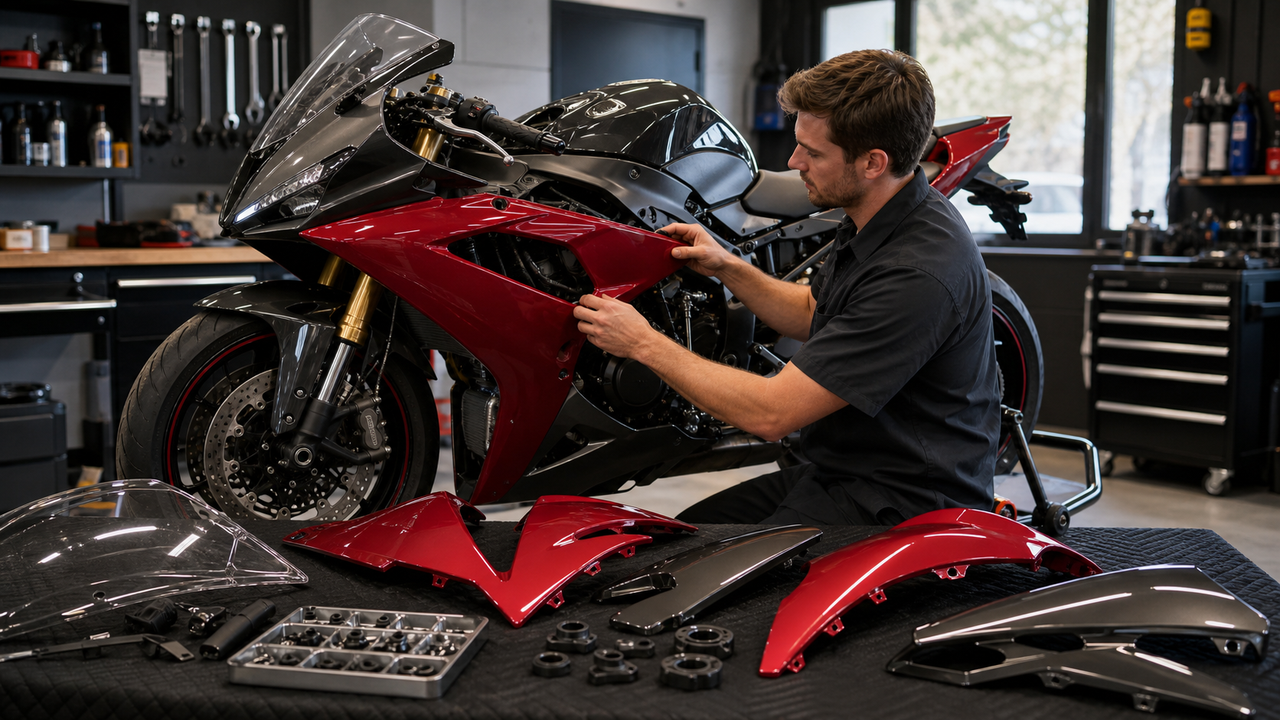
Street fairings are intended to replace the road bodywork on a particular motorcycle. A complete road-oriented set commonly provides the shapes and openings needed around the headlight area, air ducts and original mounting points. Depending on the motorcycle and kit, mirrors, turn signals, inner panels, windscreen hardware or other components may remain separate items.
That makes street fairings the natural choice when the bike still needs to function normally on public roads. They can also protect expensive original painted panels from ordinary wear, provided the replacement set is installed correctly and does not interfere with steering, cooling, wiring or hot components.
Track bodywork prioritizes closed-course preparation
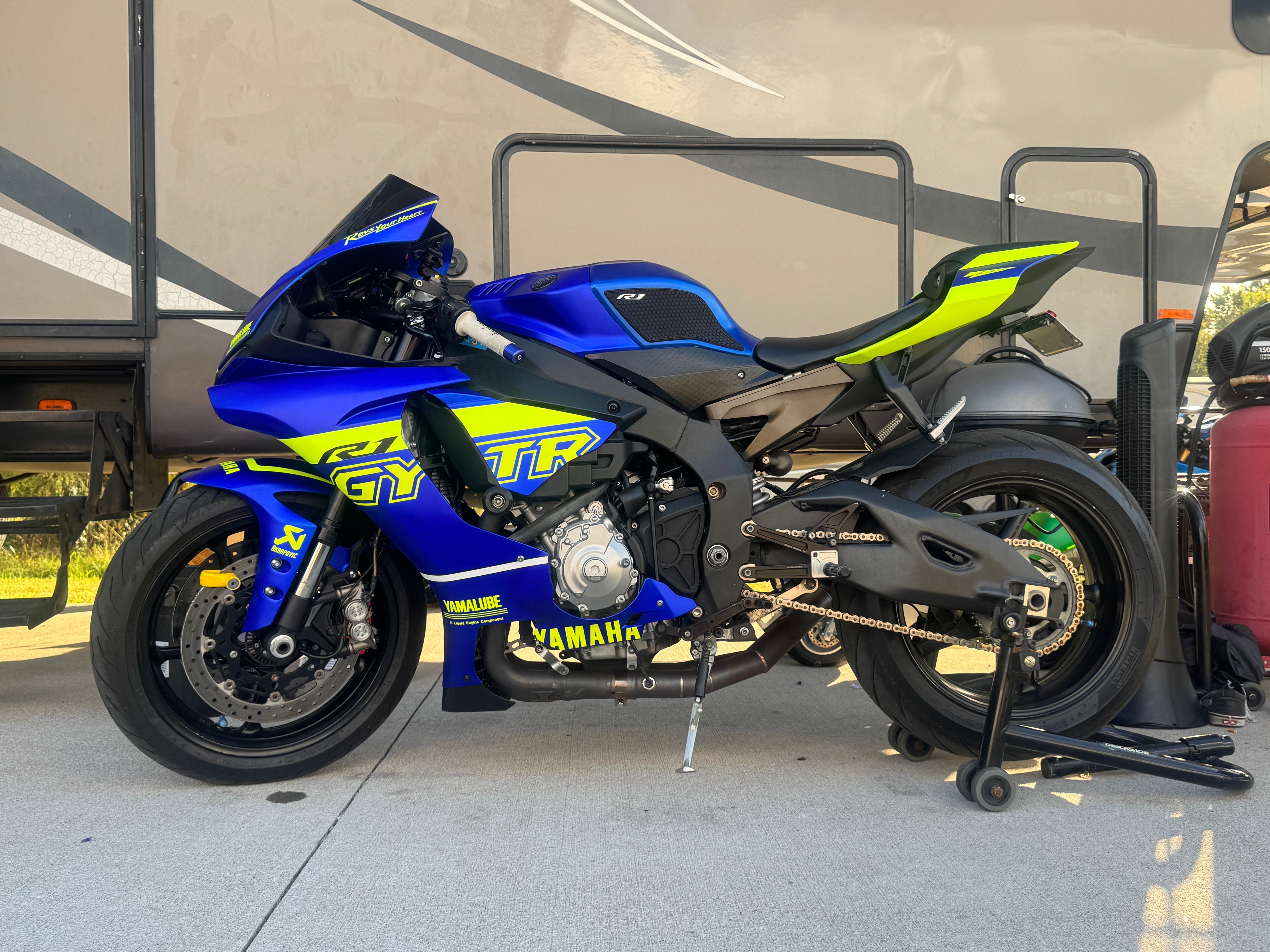
Dedicated race bodywork is normally simplified for track use. It may use fewer pieces, a different lower section or fast-release hardware, and it often omits provisions for headlights, mirrors and other road equipment. Those features can make repeated removal or track repair more convenient, but they also mean a race set may not be suitable for public-road use without additional equipment and legal review.
Do not assume every track kit is lighter, tougher or easier to install than every street kit. Construction method, panel thickness, reinforcement, hardware and finishing quality matter more than the material label alone.
Are track fairings illegal on the street?
Not automatically—but a motorcycle fitted with race bodywork may no longer meet road-use requirements. In the United States, road motorcycles are subject to equipment standards that include items such as lamps and rearview mirrors, while operating requirements and inspection rules also depend on state and local law. The relevant question is whether the finished motorcycle retains the required equipment and remains compliant, not what the fairing is called.
Because many race sets do not provide usable locations for a headlight, mirrors, signals or a license-plate assembly, they are generally a poor choice for a motorcycle that must stay road-ready. Before converting a street bike, check the applicable vehicle code or inspection rules where the motorcycle is registered. Federal equipment standards, state operating laws and inspection rules address different questions, so use official state sources or qualified legal guidance for your location.
Do you need track bodywork for a track day?
Often, no. Many recreational track-day organizations accept road motorcycles after required preparation and technical inspection. Common instructions include removing or securing mirrors and taping or disabling lights and reflectors. The exact requirements can change by organizer, circuit and rider group.
For example, AHRMA’s track-day rules and the N2 Track Days FAQ describe their own preparation and inspection expectations. Competition is a different category: racers should use the current rulebook for their sanctioning body, class and event. The AMA racing rulebook hub is a starting point, not a substitute for the event’s supplemental regulations.
A fluid-retaining lower fairing or other race-specific feature may be required in some racing classes or advanced programs, but it should not be presented as a universal rule for every recreational track day. Always download the organizer’s current technical checklist before purchasing bodywork.
Which setup works best for different weekend riders?
Mostly street riding with one or two track days a year
Keep a road-oriented setup. A model-specific painted street kit preserves the motorcycle’s normal equipment and avoids repeated conversion work. For the occasional event, follow the organizer’s instructions for mirrors, lights, reflectors, tires, brakes, fluids and safety wiring.
Regular street riding and frequent track days
Consider maintaining two bodywork sets only if you have the workspace, hardware and time to swap them correctly. Label fasteners and brackets, photograph cable routing, and inspect every mounting point during each change. Repeated rushed installation can create more risk than the second set solves.
A dedicated or transported track motorcycle
Track bodywork becomes easier to justify when road equipment is no longer needed and the bike is prepared around one organization’s technical rules. In this case, confirm the lower-fairing design, fastener system, mounting requirements, paint preparation and repair plan before ordering.
How to evaluate an Amotopart street fairing kit
Start with the Amotopart fairings and bodyworks collection, then filter by motorcycle brand, model and year. Do not rely on color or a similar-looking shape to establish fitment.
-
Identify the exact motorcycle. Record the model year, market version and trim. If the bike has been converted with a different headlight, exhaust, subframe or bracket, disclose that before ordering.
-
Check the individual product page. Verify the listed year range, every included panel, finish, windscreen or hardware, and any customization terms. Package contents are SKU-specific.
-
Ask for written fitment confirmation. Provide clear photos if the motorcycle has repaired tabs, non-original brackets or previous bodywork changes.
-
Understand the preparation level. Amotopart’s official FAQ describes its fairings as ABS and pre-drilled to OEM specifications, while also noting that minor adjustment may be needed for model variations or modified motorcycles.
-
Review return limits before modification. Inspect the shipment and dry-fit the panels before drilling, trimming, sanding or applying heat. The current return and refund policy includes conditions and exceptions, including restrictions for customized products.
A safer dry-fit and installation sequence
-
Compare the delivered panels and hardware with the product listing before removing the original bodywork.
-
Use the motorcycle’s service manual to remove panels, and store original fasteners by location.
-
Position every major replacement panel loosely before tightening any one section.
-
Check steering movement, brake and clutch line clearance, wiring, radiator airflow, exhaust clearance and heat shielding.
-
Resolve any mismatch with the seller before making irreversible changes that could affect return eligibility.
-
Tighten hardware to the motorcycle or component manufacturer’s specification, then recheck alignment after a short ride.
If a mounting tab is damaged, the bike has unknown brackets, or the panels interfere with controls, cooling or hot components, stop and use a qualified motorcycle technician.
Frequently asked questions
Can I use street fairings at a track day?
Usually, if the organizer accepts road motorcycles and the bike passes technical inspection. Follow the event’s current instructions for mirrors, lights, reflectors and other preparation items.
Can I commute with track bodywork?
Only if the finished motorcycle retains all equipment required where it is registered and operated. Many race sets omit the provisions needed for that equipment, so they are normally impractical for commuting.
Is fiberglass always better for crashes?
No. Repairability and damage behavior depend on the laminate, reinforcement, thickness, mounting system and impact. ABS can flex in some situations, while fiberglass can sometimes be repaired with composite materials, but neither label guarantees a particular crash result.
How long does a fairing swap take?
There is no reliable universal time. The result depends on the motorcycle, kit, hardware, previous repairs, required drilling or trimming, and the installer’s experience. Plan enough time for a complete dry fit and inspection rather than working toward a fixed estimate.
Final recommendation
For most weekend riders who still use public roads, choose a model-specific street fairing kit and prepare the motorcycle separately for each occasional track day. Move to dedicated track bodywork when closed-course use becomes frequent enough to justify the extra setup, transport and maintenance.
Whichever route you choose, verify the exact motorcycle and the current event rules before buying. Compare the available Amotopart fairing options, confirm the specific SKU and package contents in writing, and dry-fit every panel before final installation.
This article provides general purchasing and preparation information. It is not legal advice and does not replace the motorcycle service manual, local vehicle law or an event organizer’s current technical rules.